
TL;DR
Private limited companies in India must comply with multiple legal, tax, and regulatory requirements throughout the year. These include ROC filings, annual returns, board meetings, GST filings, TDS compliance, income tax returns, audit requirements, and director KYC obligations. Failure to comply can result in penalties, prosecution, and director disqualification. This checklist helps directors stay compliant and avoid costly mistakes.
Why Compliance Matters for Private Limited Companies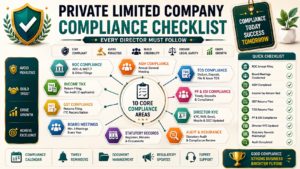
A private limited company enjoys several advantages, including limited liability protection, separate legal identity, easier fundraising opportunities, and increased business credibility.
However, these benefits come with ongoing compliance obligations under:
- Companies Act, 2013
- Income Tax Act
- GST Act
- Labour Laws
- MCA Regulations
- Other statutory frameworks
Many directors focus heavily on business growth but overlook compliance responsibilities until notices or penalties arrive.
Compliance should not be viewed as a burden. It protects the company, improves transparency, and strengthens investor confidence.
Responsibilities of Company Directors
Directors are responsible for ensuring that the company fulfills its statutory obligations.
Their responsibilities include:
- Maintaining accurate financial records
- Conducting board meetings
- Filing annual returns
- Ensuring tax compliance
- Protecting shareholder interests
- Maintaining statutory registers
- Implementing internal controls
- Responding to regulatory notices
Ignorance of compliance requirements is not considered a valid defense under the Companies Act.
Complete Private Limited Company Compliance Checklist
ROC Compliance Requirements
The Registrar of Companies (ROC) requires companies to file various forms and annual returns.
Mandatory ROC Filings
Form AOC-4
Used for filing:
- Financial Statements
- Balance Sheet
- Profit and Loss Account
- Auditor Reports
Form MGT-7
Used for filing:
- Annual Return
- Shareholding Details
- Director Information
- Registered Office Information
Key Compliance Objective
These filings provide transparency regarding the company’s financial and operational status.
Board Meeting Compliance
Board meetings are mandatory even for small private limited companies.
Minimum Requirement
A private limited company must generally hold:
- At least 4 Board Meetings annually
- Maximum gap of 120 days between two meetings
Board Meeting Agenda May Include
- Financial performance review
- Compliance review
- Strategic decisions
- Budget approvals
- Funding discussions
- Risk management updates
Documentation Required
- Notice of Meeting
- Attendance Register
- Minutes of Meeting
- Resolutions Passed
Proper documentation is essential during inspections or audits.
Annual General Meeting (AGM) Compliance
Every private limited company must conduct an Annual General Meeting.
AGM Objectives
- Adoption of Financial Statements
- Auditor Appointment
- Director-related Resolutions
- Shareholder Discussions
Key Benefits
AGMs improve governance and maintain transparency with shareholders.
Income Tax Compliance
Private limited companies are required to file Income Tax Returns annually.
Key Tax Obligations
- Income Tax Return Filing
- Advance Tax Payments
- Tax Audit (if applicable)
- Maintenance of Books of Accounts
Important Areas to Monitor
- Revenue recognition
- Expense classification
- Depreciation claims
- Related-party transactions
- Tax deductions
Accurate tax reporting reduces scrutiny risk and ensures smooth assessments.
GST Compliance
If the company is registered under GST, compliance becomes an ongoing responsibility.
GST Requirements
- GST Registration
- Monthly or Quarterly Returns
- Annual Reconciliation
- Invoice Compliance
- Input Tax Credit Reconciliation
Common GST Errors
- Wrong GST classification
- Missed filing deadlines
- Incorrect ITC claims
- Vendor mismatches
These errors often trigger departmental notices.
TDS Compliance
Tax Deducted at Source (TDS) obligations apply to many company transactions.
TDS Activities
- Deduct TDS where applicable
- Deposit TDS on time
- File quarterly TDS returns
- Issue TDS certificates
Common Transactions Covered
- Salaries
- Professional Fees
- Contractor Payments
- Rent Payments
- Commission Payments
Failure to comply may result in interest and penalties.
PF and ESI Compliance
Companies meeting employee thresholds must comply with labour regulations.
PF Compliance
- Employee registration
- Monthly PF deposits
- Employee record maintenance
ESI Compliance
- Employee enrollment
- Monthly contributions
- Statutory reporting
Labour compliance violations can attract inspections and financial penalties.
Statutory Registers and Record Maintenance
Private limited companies are legally required to maintain specific statutory records throughout the year.
Essential Statutory Registers
- Register of Members
- Register of Directors
- Register of Charges
- Register of Share Transfers
- Register of Loans and Investments
- Register of Related Party Transactions
Additional Records to Maintain
- Share Certificates
- Financial Statements
- Accounting Records
- Board Meeting Minutes
- AGM Minutes
- Tax Records
- GST Documentation
Proper record maintenance helps during:
- ROC inspections
- Income Tax assessments
- GST audits
- Due diligence exercises
- Investor reviews
- Business acquisitions
Director KYC Compliance
Director Identification Number (DIN) holders must ensure their KYC details remain updated.
Director KYC Requirements
Directors should regularly verify:
- Mobile Number
- Email Address
- PAN Details
- Residential Address
- Digital Signature Certificate (DSC)
Failure to complete Director KYC requirements may result in DIN deactivation and additional penalties.
Audit Requirements
Most private limited companies are subject to statutory audit requirements.
Statutory Audit Objectives
- Verify financial accuracy
- Assess internal controls
- Identify compliance gaps
- Ensure regulatory adherence
- Improve transparency
Auditor Responsibilities
The auditor reviews:
- Financial statements
- Accounting policies
- Internal control systems
- Regulatory compliance
- Risk areas
Regular audits strengthen financial governance and improve stakeholder confidence.
Penalties for Non-Compliance
Many directors underestimate the financial and legal consequences of missing compliance obligations.
Common Consequences
Financial Penalties
Late filing fees can accumulate quickly across multiple forms and returns.
Director Disqualification
Persistent non-compliance may lead to restrictions on directors.
Regulatory Notices
Authorities may issue notices requiring explanations and supporting documentation.
Increased Scrutiny
Repeated compliance failures can trigger deeper examinations by tax and regulatory departments.
Funding Challenges
Investors and lenders often review compliance history before approving funding or credit facilities.
Quick Compliance Checklist for Directors
Use this checklist regularly throughout the year:
| Compliance Area | Status Check |
|---|---|
| ROC Annual Filing | ✓ |
| Board Meetings Conducted | ✓ |
| AGM Completed | ✓ |
| Income Tax Return Filed | ✓ |
| GST Returns Filed | ✓ |
| TDS Returns Filed | ✓ |
| PF Compliance Completed | ✓ |
| ESI Compliance Completed | ✓ |
| Director KYC Updated | ✓ |
| Statutory Registers Maintained | ✓ |
| Audit Completed | ✓ |
| Financial Statements Approved | ✓ |
This checklist can serve as a simple monthly and quarterly compliance review tool.
Best Practices to Stay Compliant
Compliance becomes easier when systems are implemented proactively.
Create an Annual Compliance Calendar
Track all filing deadlines in advance.
Include:
- GST dates
- TDS deadlines
- ROC filing dates
- Tax payment schedules
- Audit timelines
Conduct Quarterly Compliance Reviews
Quarterly reviews help identify issues before they become major problems.
Review:
- Pending filings
- Tax obligations
- Documentation gaps
- Regulatory updates
Maintain Digital Documentation
Store important records securely.
Examples:
- GST returns
- Tax filings
- Audit reports
- Board resolutions
- Shareholder records
Digital storage improves accessibility and reduces document loss risks.
Monitor Regulatory Changes
Corporate regulations evolve frequently.
Areas requiring regular monitoring include:
- GST updates
- MCA notifications
- Income Tax amendments
- Labour law changes
Keeping current prevents accidental non-compliance.
How a Chartered Accountant Can Help
Managing compliance internally often becomes difficult as a company grows.
An experienced Chartered Accountant can assist with:
ROC Compliance
- Annual filing preparation
- Form submission
- MCA compliance monitoring
Tax Compliance
- Income Tax filing
- Tax planning
- Assessment support
GST Compliance
- Registration
- Return filing
- ITC reconciliation
- Notice handling
Audit Support
- Statutory audits
- Internal audits
- Compliance reviews
Director Advisory
- Governance support
- Regulatory guidance
- Risk mitigation strategies
Professional assistance reduces compliance burdens while helping directors focus on business growth.
Conclusion
Compliance is one of the most important responsibilities of every private limited company director. While growth, sales, and profitability remain key priorities, ignoring statutory obligations can expose a company to significant legal and financial risks.
A structured Private Limited Company Compliance Checklist helps ensure that critical responsibilities such as ROC filings, GST returns, income tax compliance, board meetings, audits, and statutory record maintenance are completed on time.
Businesses that prioritize compliance not only avoid penalties but also build stronger credibility with investors, lenders, customers, and regulators.
Directors who adopt a proactive compliance culture position their companies for sustainable long-term growth.
6. FAQ SECTION
What compliances are mandatory for a private limited company?
Mandatory compliances typically include ROC annual filings, board meetings, AGM compliance, income tax filing, GST compliance (where applicable), TDS compliance, statutory audits, and maintenance of statutory registers.
How many board meetings are required annually?
Generally, private limited companies must hold at least four board meetings each year, with a maximum gap of 120 days between meetings.
What happens if ROC filings are delayed?
Delayed ROC filings may result in additional filing fees, penalties, notices, and potential compliance risks for directors and the company.
Is GST registration compulsory for every private limited company?
GST registration depends on turnover thresholds and business activities. However, many private limited companies voluntarily register to claim Input Tax Credit and improve business credibility.
Can directors be held liable for compliance failures?
Yes. Directors may face penalties, disqualification risks, and regulatory action in cases of serious or repeated non-compliance.
What records must a private limited company maintain?
Companies should maintain financial records, statutory registers, board meeting minutes, shareholder records, tax documents, and audit reports.
Why is Director KYC important?
Director KYC ensures that MCA records remain updated. Failure to comply may lead to DIN deactivation and compliance complications.
How can a Chartered Accountant help with company compliance?
A Chartered Accountant can manage ROC filings, GST compliance, tax planning, audits, annual returns, regulatory reporting, and compliance monitoring to reduce risks and improve governance.