
GSTN Advisory: Enhancements to the e-Way Bill System (Effective May 20, 2026)
📖 Introduction
The Goods and Services Tax Network (GSTN) has rolled out a significant advisory introducing new features and compliance requirements in the e-Way Bill (EWB) system. These changes, effective from May 20, 2026, aim to strengthen traceability, improve compliance, and streamline workflows for taxpayers, transporters, and ERP/API integrators.
The e-Way Bill system has always been a cornerstone of GST compliance, ensuring transparency in the movement of goods. With these updates, GSTN is addressing long-standing challenges such as open-ended bills, incomplete consignee details, and manual closure delays. Businesses must adapt quickly to avoid compliance lapses and leverage the new features for smoother operations.
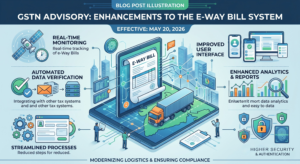
🔑 Key Updates in the Advisory
- Mandatory Capture of “Ship To GSTIN”
One of the most impactful changes is the mandatory entry of the “Ship To GSTIN” field in Bill-To/Ship-To transactions.
- What’s new?
- Every Bill-To/Ship-To transaction must now include the GSTIN of the consignee.
- If the consignee is unregistered, the value “URP” (Unregistered Person) must be entered.
- Why this matters?
- Ensures accurate identification of delivery destinations.
- Reduces data gaps in tracking goods movement.
- Strengthens audit trails for compliance officers.
- Voluntary e-Way Bill Closure Facility
GSTN has introduced a voluntary closure option for e-Way Bills, allowing stakeholders to close bills once goods are delivered.
- Who can close?
- Supplier
- Recipient
- Transporter
- Driver/authorized person (via registered mobile number)
- Closure methods:
- By e-Way Bill number
- By date
- Key rules:
- Bills can be closed same day or next day after delivery.
- Closure is supported via portal and APIs.
- Benefits:
- Prevents misuse of open-ended bills.
- Improves transparency in goods movement.
- Reduces compliance risks during audits.
- API and System Integration Readiness
To support ERP vendors, GSPs, and ASPs, GSTN has released updated API specifications.
- Sandbox availability:
- APIs are already live in the Sandbox environment for testing.
- Production deployment:
- Scheduled by June 15, 2026.
- Action points for integrators:
- Access updated APIs.
- Conduct sandbox testing.
- Configure ERP/GSP systems for compliance.
- Action Required by Stakeholders
To ensure smooth compliance, businesses and partners must act promptly:
- Taxpayers & Businesses
- Update ERP systems to capture Ship To GSTIN.
- Train staff on closure workflows.
- Monitor compliance deadlines.
- Transporters
- Familiarize drivers with closure options.
- Ensure mobile numbers are registered.
- Use closure facility to avoid open-ended bills.
- ERP Vendors & GSPs
- Integrate updated APIs.
- Conduct sandbox testing before June 15.
- Provide training and support to clients.
📊 Benefits of the Update
These changes bring multiple advantages across the compliance ecosystem:
- For Businesses:
- Reduced audit risks.
- Improved accuracy in consignee details.
- Streamlined closure process.
- For Transporters:
- Greater control over bill lifecycle.
- Reduced liability for open-ended bills.
- For GSTN & Authorities:
- Enhanced traceability.
- Stronger compliance enforcement.
- Better data integrity.
✅ Key Takeaways
- Ship To GSTIN mandatory in Bill-To/Ship-To transactions.
- Voluntary closure facility improves transparency and reduces misuse.
- API readiness critical for ERP/GSP integrators before June 15, 2026.
- Stakeholders must update systems and train teams to avoid compliance lapses.
📖 Conclusion
The GSTN advisory marks a major step forward in strengthening compliance and operational efficiency within the e-Way Bill system. By mandating “Ship To GSTIN” and introducing voluntary closure, GSTN ensures better traceability, reduced misuse, and smoother workflows.
Businesses should act promptly to:
- Update ERP/API systems
- Train staff on closure workflows
- Adopt new compliance practices
These proactive measures will not only ensure compliance but also enhance trust and transparency in the GST ecosystem.